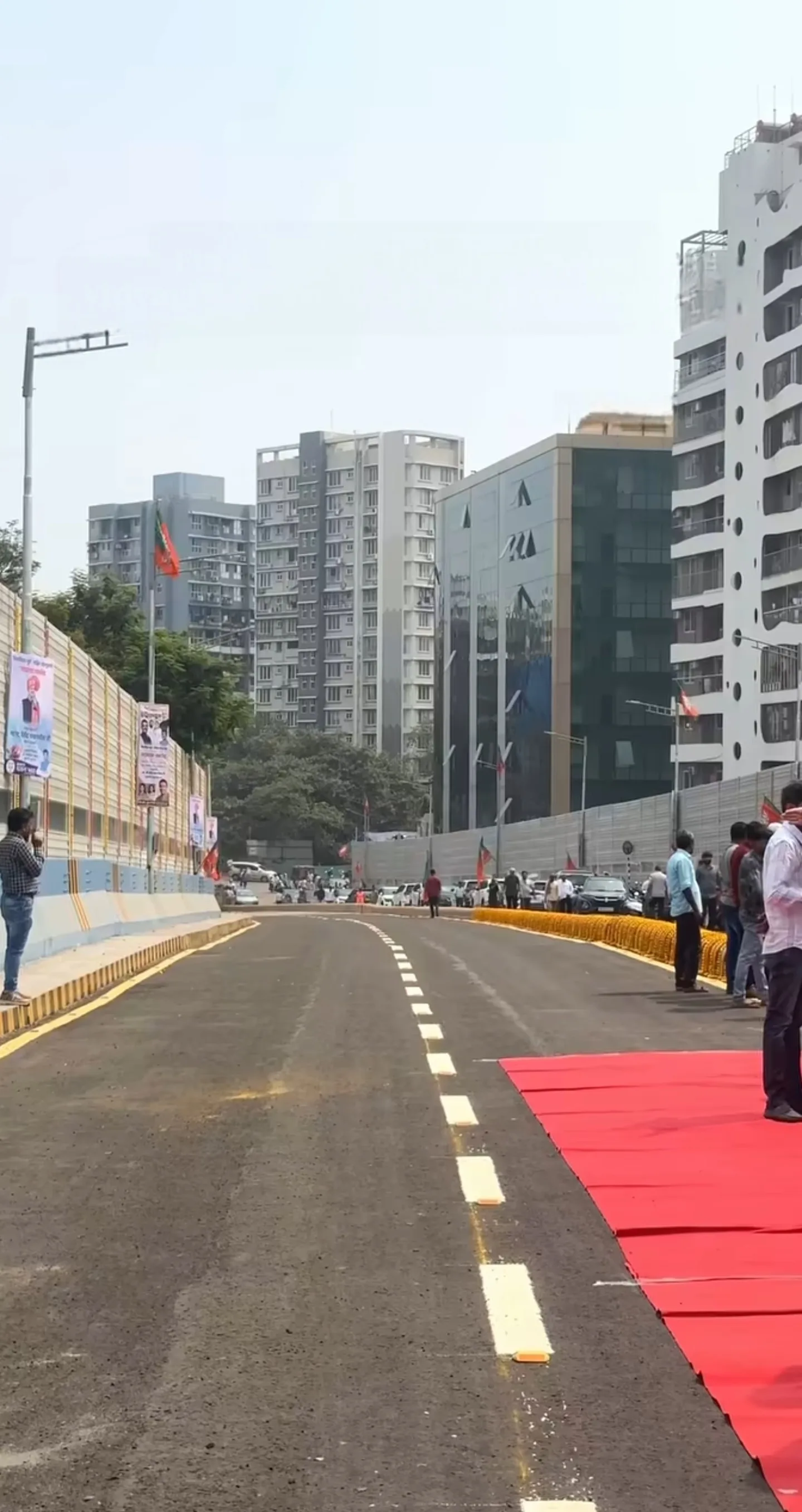
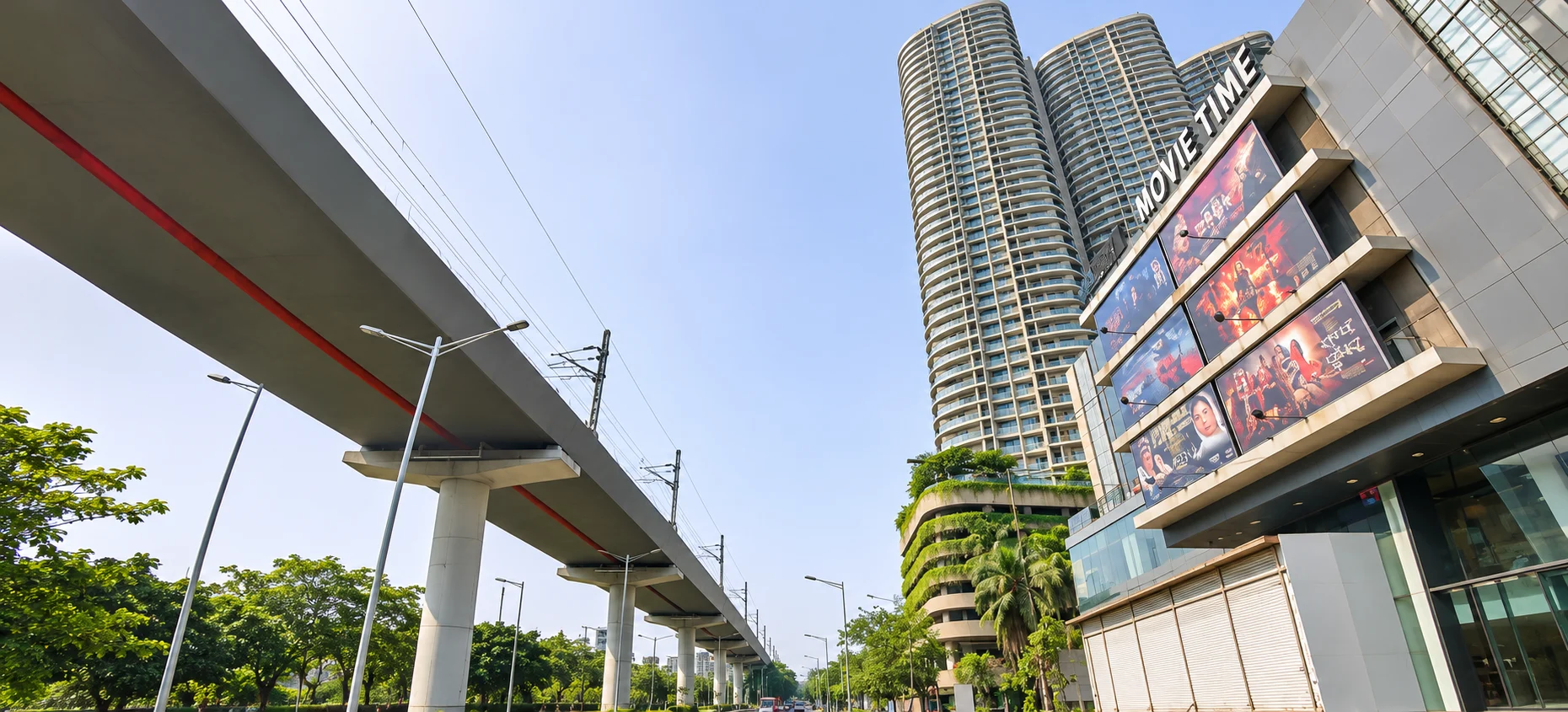
Mumbai is preparing for a significant upgrade to its urban road network, with three major flyovers at Sion, Vidyavihar and Goregaon East scheduled for inauguration on October 22, 2026. These projects are designed to restore important road connections, reduce pressure on congested junctions and improve everyday mobility across different parts of the city.
According to the Brihanmumbai Municipal Corporation (BMC), Maharashtra Chief Minister Devendra Fadnavis is scheduled to inaugurate the three structures virtually at 1 PM on Thursday, October 22. Beyond the transport benefits, the projects are also relevant to Mumbai's residential property market, where commute convenience and access to employment centres often influence homebuying and rental decisions.
Mumbai's Three New Flyovers: Key Highlights
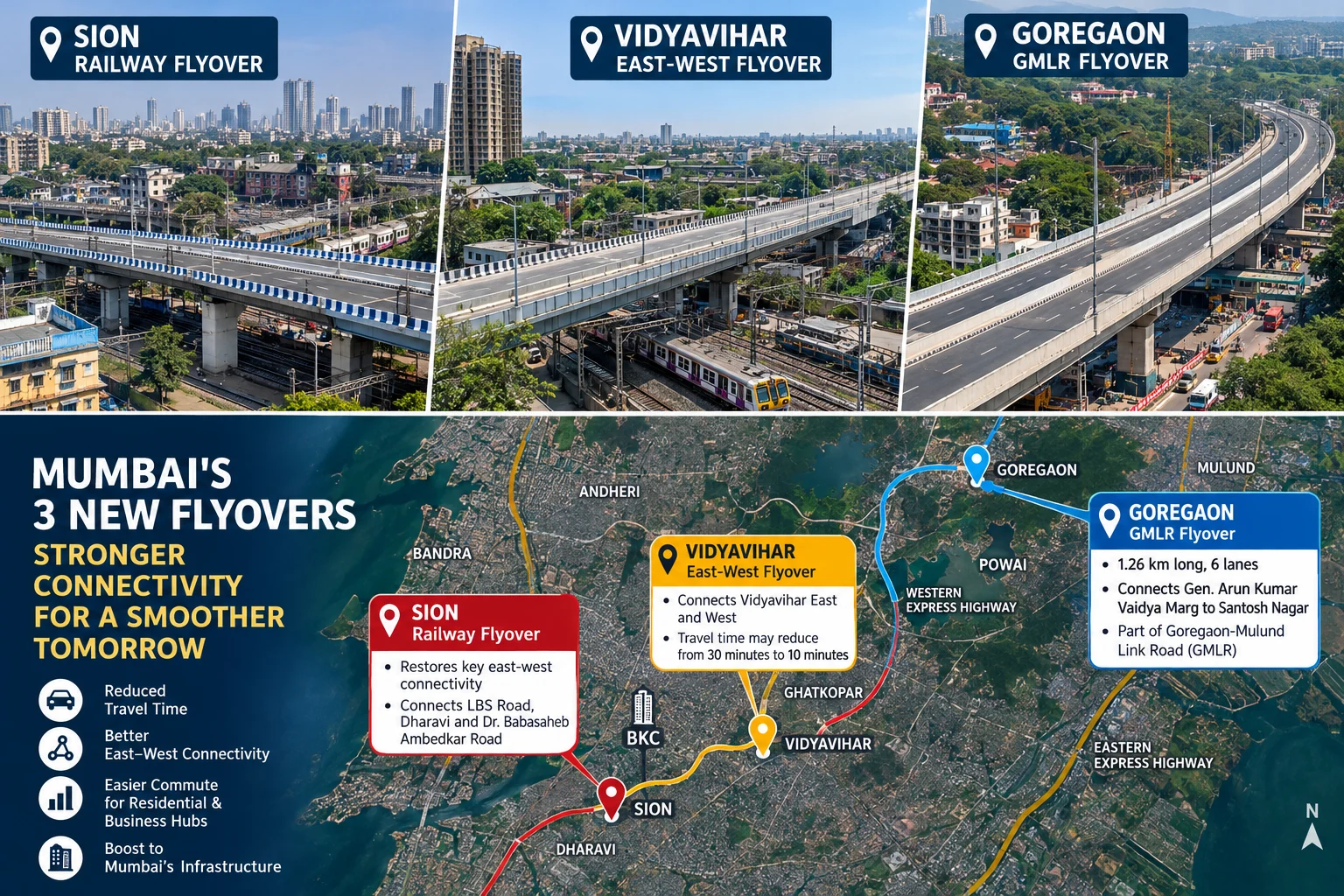
The three projects serve different sections of Mumbai. Sion's reconstructed railway bridge restores an important connection between central Mumbai neighbourhoods. The Vidyavihar flyover links areas separated by railway tracks, while the Goregaon East flyover supports the larger Goregaon-Mulund Link Road development.
Swipe across to compare all columns →
Flyover
Location
Main Benefit
Sion Railway Overbridge
Sion, Central Mumbai
Restores key east-west road connectivity
Vidyavihar East-West Flyover
Vidyavihar, Ghatkopar
Expected to reduce local travel time from around 30 to 10 minutes
GMLR Goregaon Flyover
Goregaon East
Bypasses busy junctions and supports future east-west connectivity
1. Sion Railway Flyover: Reconnecting Central Mumbai
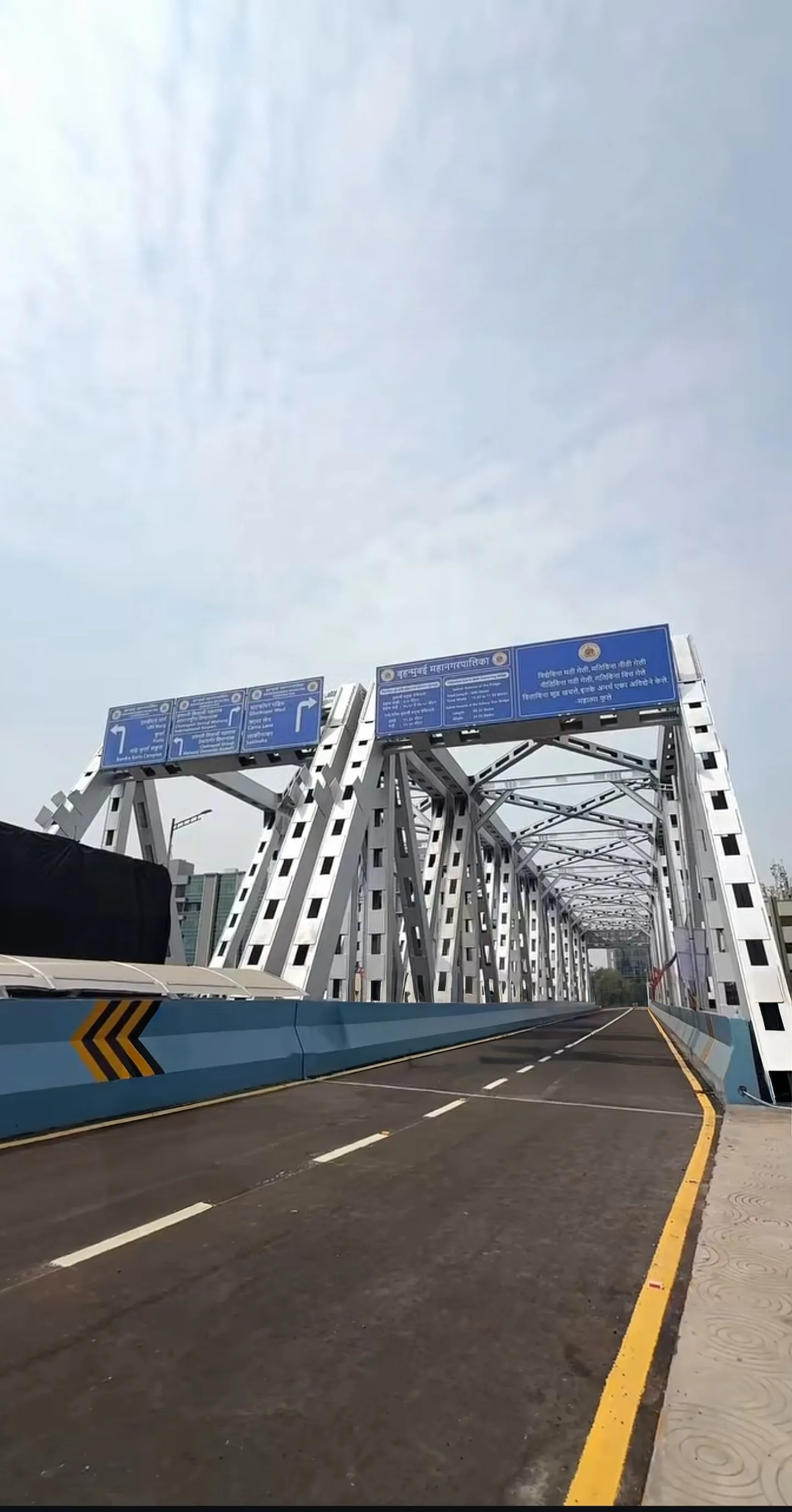
The reconstruction of the Sion Railway Overbridge is one of Mumbai's important transport improvements in 2026. The former bridge, approximately 112 years old, had been declared unsafe and required replacement. Its closure disrupted an established road connection used by commuters travelling between Sion, Dharavi, Kurla and nearby business districts.
The replacement bridge has been developed through coordination between Central Railway and the BMC. The railway authorities handled the main structure over the tracks, while the municipal bridges department worked on the adjoining approach roads and associated infrastructure.
Why Was the Sion Bridge Reconstructed?
The reconstruction was necessary for two reasons: the condition of the old structure and the planned expansion of railway capacity. Under the Mumbai Urban Transport Project-II, Central Railway intends to develop additional fifth and sixth railway lines between Chhatrapati Shivaji Maharaj Terminus (CSMT) and Kurla. The redesigned bridge provides space for this proposed expansion.
Sion Flyover Routes and Connections
Western approach towards Lal Bahadur Shastri Road in the Kurla direction.
Connection towards Sant Rohidas Road and Dharavi.
Eastern approach connecting to Dr Babasaheb Ambedkar Road.
Improved access between central Mumbai's eastern and western road networks.
Additional pedestrian connectivity through associated footbridge and subway improvements.
The new bridge uses two large steel girders, each approximately 54.5 metres long and weighing 496 tonnes. The project also includes pedestrian improvements. A subway beneath Lal Bahadur Shastri Road opened in February 2026, while the reconstructed subway beneath Sant Rohidas Road reopened in July 2026.
How Will the Sion Flyover Benefit Commuters?
For residents and commuters, the restored connection could reduce the need for longer diversions through surrounding roads. Areas including Sion, Dharavi, Kurla and routes towards Bandra-Kurla Complex (BKC) may benefit from more convenient road access. Actual travel-time savings will depend on traffic volumes, signal arrangements and the chosen route.
2. Vidyavihar Flyover: A New East-West Connection
Vidyavihar has long faced the challenge of railway tracks separating neighbourhoods on its eastern and western sides. The new railway overbridge is intended to create a more direct driving connection, reducing reliance on existing congested crossings in the Ghatkopar area.
The flyover connects Ramchandra Chemburkar Road on the eastern side with Lal Bahadur Shastri Road on the western side. The approximately 650-metre project includes a bridge section above railway tracks and approach roads on both sides.
Vidyavihar Flyover Dimensions and Features
Overall project length of approximately 650 metres.
Approximately 100 metres of railway-crossing bridge.
Eastern approach road measuring around 220 metres.
Western approach road measuring around 330 metres.
Carriageway widths ranging from approximately 15.5 to 17.5 metres.
Associated improvements to station access, pedestrian connections and railway facilities.
Vidyavihar Travel Time: Expected 30 Minutes to 10 Minutes
One of the project's most significant expected advantages is shorter travel time between Vidyavihar East and West. According to the BMC's estimates, some cross-suburb journeys that previously took approximately 30 minutes could take around 10 minutes using the new connection.
This represents a potential saving of about 20 minutes on the affected journey. However, the estimate should not be interpreted as a guaranteed travel time during every peak-hour period. Congestion, route selection and traffic conditions will continue to influence actual commuting times.
Local commuters travelling between the two sides of the Central Railway corridor.
Residents using road connections towards Kurla and surrounding eastern suburban areas.
For households choosing between Vidyavihar, Ghatkopar and nearby residential neighbourhoods, improved road connectivity could make daily travel more convenient. The flyover may be especially relevant to residents whose workplaces, schools or essential services are located on the opposite side of the railway line.
3. Goregaon-Mulund Link Road Flyover: A Major Upgrade for Goregaon East
The Goregaon East flyover forms part of the wider Goregaon-Mulund Link Road (GMLR), one of Mumbai's major planned east-west transport corridors. The larger project is intended to improve connectivity between the Western Express Highway and the Eastern Express Highway.
The newly completed section measures approximately 1.26 kilometres and provides three lanes in each direction. Located around the Hotel Ratnagiri junction, the elevated road connects General Arun Kumar Vaidya Marg with the Santosh Nagar area along Dadasaheb Phalke Chitranagari Road.
Important Features of the Goregaon East Flyover
Approximately 1.26 kilometres of elevated road.
Six traffic lanes, with three lanes in each direction.
Connection between General Arun Kumar Vaidya Marg and the Santosh Nagar side of Film City Road.
Designed to ease vehicle movement around Dindoshi Court and nearby junctions.
Precast concrete construction with specially designed curved steel sections.
Part of the wider GMLR corridor planned to improve cross-city connectivity.
Which Traffic Bottlenecks Could Improve?
The new elevated section is expected to reduce pressure on local junctions around Dindoshi Court, Hotel Ratnagiri and the Walbhat River area. By allowing a portion of through traffic to avoid congested surface-level intersections, the structure may improve traffic distribution around Goregaon East.
Is the Entire Goregaon-Mulund Link Road Now Complete?
No. The October 2026 inauguration concerns the completed Goregaon East flyover section, not the entire Goregaon-Mulund Link Road corridor. The broader project also includes planned twin tunnels and other connecting infrastructure. The full cross-suburban travel benefits will depend on completion and commissioning of the remaining sections.
How Mumbai's New Flyovers Could Affect the Real Estate Market
Transport infrastructure is an important factor in residential property selection. Buyers often assess not only a project's amenities and carpet area but also the time required to reach workplaces, schools, hospitals and transport hubs. Better road connectivity can improve a location's everyday convenience and may influence future housing demand.
However, a new flyover does not automatically result in higher property prices. Market performance also depends on housing supply, project quality, affordability, financing conditions, rental demand and wider economic trends.
Sion, Dharavi and Nearby BKC Access
The reconstructed Sion bridge is relevant to residents using routes between Sion, Dharavi, Kurla and Bandra-Kurla Complex. Better access across these areas may improve commuting convenience for people working in Mumbai's central business districts. Buyers evaluating homes near these routes should compare actual driving times after the bridge becomes operational.
Vidyavihar and Ghatkopar Residential Demand
Vidyavihar and Ghatkopar offer access to important railway, road and commercial networks. The new east-west flyover could make neighbourhoods on both sides of the tracks more convenient for households that frequently travel across the railway corridor. This may influence rental and purchase preferences, although any resulting change in property values remains uncertain.
Goregaon East, Dindoshi and Film City Road
Goregaon East contains established residential societies, newer apartment developments and employment destinations. Improved movement around Dindoshi and Film City Road could be valuable to residents who regularly commute through these junctions. The wider GMLR project may eventually improve access towards Mumbai's eastern suburbs, but its long-term effects should be assessed as additional sections become operational.
Connectivity Benefits: What Homebuyers Should Compare
Swipe across to compare all columns →
Location
Infrastructure Change
What Buyers Should Evaluate
Sion and Dharavi
Reconstructed railway overbridge
Actual access to Kurla, BKC and major roads
Vidyavihar and Ghatkopar
New east-west railway crossing
Peak-hour travel and station connectivity
Goregaon East and Dindoshi
1.26-km GMLR flyover
Local traffic relief and future GMLR progress
Will the Three Flyovers Increase Mumbai Property Prices?
Improved infrastructure can make an area more attractive to residents and investors, particularly where commuting difficulties have previously limited convenience. Nevertheless, there is no verified basis to assign a specific percentage increase in residential prices or rental yields to these three flyovers as of October 22, 2026.
A sensible property investment decision should consider existing market transactions, current rental demand, available inventory, upcoming construction, project approvals and long-term neighbourhood development. Infrastructure should be treated as one part of the overall investment assessment rather than a guarantee of appreciation.
A better road connection can improve everyday convenience, but a property's long-term value still depends on its location, quality, affordability and genuine housing demand.
What Should Mumbai Homebuyers Check Before Investing Near These Flyovers?
Test actual commute times during weekday morning and evening peak hours.
Check whether the property has practical access to the flyover's entry and exit points.
Compare existing property prices with recent registered transactions.
Verify the project's MahaRERA registration and applicable approvals.
Check for traffic noise, congestion and changes to local road access.
Distinguish completed infrastructure from projects that are still under construction.
Frequently Asked Questions About Mumbai Flyovers 2026
When are the Sion, Vidyavihar and Goregaon flyovers scheduled to open?
The BMC scheduled the inauguration of all three flyovers for Thursday, October 22, 2026, at 1 PM. Motorists should confirm the latest public opening and traffic arrangements before using the routes.
How much time could the Vidyavihar flyover save?
According to BMC estimates, travel between Vidyavihar East and West could reduce from approximately 30 minutes to 10 minutes on affected routes, representing a potential saving of around 20 minutes.
Where does the new Sion railway bridge connect?
The reconstructed Sion bridge connects approach roads towards LBS Road and Dharavi on the western side with Dr Babasaheb Ambedkar Road on the eastern side, restoring an important road crossing near Sion railway station.
How long is the Goregaon-Mulund Link Road flyover?
The completed Goregaon East flyover is approximately 1.26 kilometres long and has six lanes. It forms part of the larger Goregaon-Mulund Link Road project.
Is the full GMLR corridor operational in October 2026?
No. The Goregaon East flyover is one completed component of the wider GMLR development. Additional infrastructure, including the planned twin-tunnel connection, is separate from this inauguration.
Will the new flyovers increase property values?
They may improve accessibility and make certain neighbourhoods more attractive to residents. However, property appreciation and rental growth cannot be guaranteed and require local market evidence.
Final Thoughts: A Step Towards Better Mumbai Connectivity
The Sion, Vidyavihar and Goregaon East flyovers represent three different improvements to Mumbai's road infrastructure. One restores an important central Mumbai crossing, another creates a more direct railway-crossing connection, and the third supports a larger east-west corridor under development.
For residents, the most meaningful outcome will be how reliably these routes improve everyday journeys. For homebuyers and property investors, the developments offer another reason to study neighbourhood accessibility carefully, while continuing to evaluate property fundamentals and verified project information.
Sources and Editorial Note
This article is based on the BMC's October 21, 2026 announcement, PTI reporting, and infrastructure coverage published by NDTV Profit, Mid-day and The Indian Express. Travel-time improvements are official estimates, not independently measured results. Information reflects the announced position on the morning of October 22, 2026, before the scheduled inauguration.
Explore Residential Properties Across Mumbai
Searching for a home with convenient road, railway and business-district access? Explore Mumbai residential projects, resale flats and available properties on HomesPro.